What Is Wall Pilates?
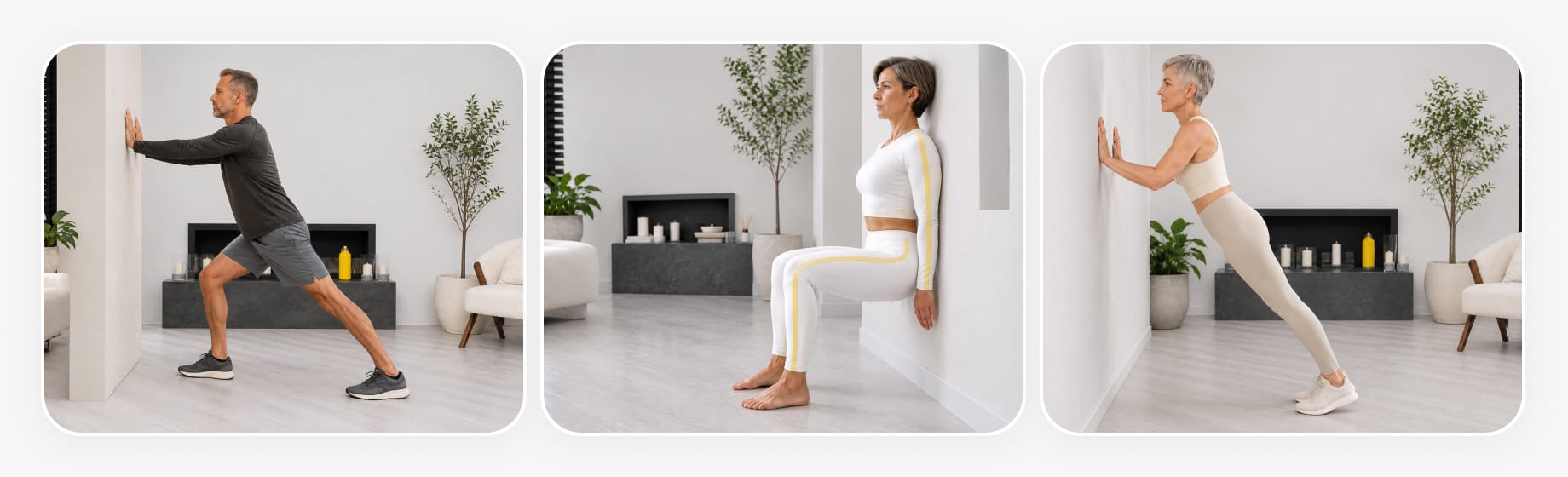
Wall Pilates is a low-impact exercise system that replaces standard studio equipment with a fixed vertical surface. In classic Pilates, you rely on a floor mat or expensive reformer machines to create tension. Trying this pilates program requires no studio machinery. In a standard gym, you lift weighted iron plates. Here, the wall transforms this dynamic. It acts as an active resistance tool that presses back against your limbs. This makes it an ideal format of pilates for beginners because constant tactile feedback allows you to feel exactly where your body sits in space. The wall is an asset rather than a limitation. It provides stability during standing exercises and elevates your legs during floor work. This configuration alters muscle engagement across your abdomen and hips, making movements more precise.
Start wall pilates todayBenefits of Wall Pilates
Exploring these wall pilates benefits shows how a structured pilates program upgrades your physical conditioning.
Improves Posture and Spinal Alignment:
Wall-based exercises provide external feedback that helps maintain proper body positioning during movement. According to a systematic review of Pilates training effects, regular Pilates practice can improve posture, flexibility, and overall physical function.
Builds Core Strength and Stability:
Controlled Pilates movements activate deep abdominal muscles that support everyday movement. A systematic review and meta-analysis on Pilates and core muscle strength found that Pilates training improves core strength and muscular endurance.
Supports Balance and Fall Prevention:
Wall support creates a more stable environment for practicing balance-focused movements. According to a review of Pilates effects on balance in older adults, Pilates exercises can improve balance and functional mobility.
Enhances Flexibility and Mobility:
The wall allows controlled stretching and movement patterns without requiring advanced flexibility. Research from a Pilates flexibility systematic review shows that regular Pilates practice improves flexibility and range of motion.
Provides Low-Impact Strength Training:
Wall Pilates uses body weight and controlled resistance instead of heavy equipment. The Harvard Health Publishing overview of Pilates notes that Pilates can support muscle strength while remaining a low-impact form of exercise.
Makes Home Workouts More Accessible:
Wall Pilates requires minimal equipment and can be performed at home with a wall and a mat. According to the World Health Organization physical activity guidelines, regular muscle-strengthening activities help support long-term health and physical function.