What Is Tai Chi?
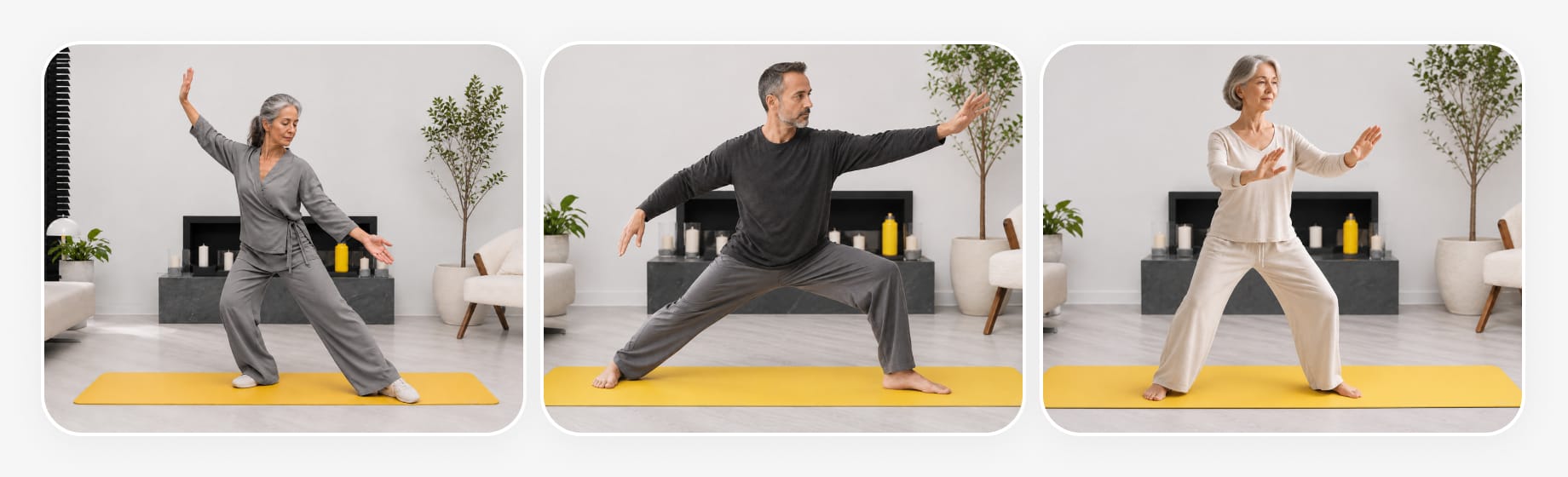
Historically, Tai Chi originated as a martial tradition in China before transitioning into a health preservation methodology. The practice consists of specific choreography executed at a highly deliberate pace. This controlled deceleration explains why the forms work effectively as Tai Chi for balance. When a person moves rapidly, momentum handles a portion of the physical workload. Moving slowly forces the quadriceps, glutes, and core muscles to remain contractually engaged to support the skeleton.
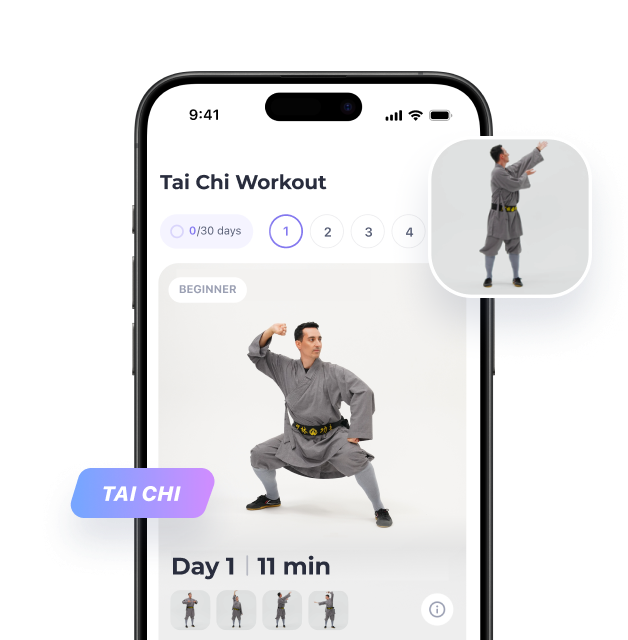
This modern Tai Chi program brings these ancient principles directly into your daily routine. By focusing on steady, low-impact movements, it actively coordinates your breathing with every physical shift. This systematic approach not only reduces joint stress and improves overall alignment but also serves as a moving meditation that calms the nervous system and sharpens mental clarity.
Start Tai Chi program Today!Tai Chi Benefits: What Science Says
Reduces Fall Risk and Lateral Sway
2,000 healthy older persons with a mean age of 68 were the subject of a meta-analysis of 28 randomized controlled trials. According to the statistics, practicing for more than 45 minutes twice a week considerably raises Berg Balance Scale scores. The practice also increases functional reach distance (NCBI/PMC).
Improves Mobility in Frail Seniors
A 12-week quality improvement study focused on residential care facility residents with a mean age of 83 years. The participants followed gentle Sun-style stepping protocols. This intervention yielded a 21% improvement in objective mobility markers during Timed Up and Go tests (NCBI/PMC).
Alleviates Fear of Falling
The same 12-week intervention recorded a 20% reduction in the fear of falling based on the Falls Efficacy Scale. This psychological change helps vulnerable individuals navigate their living environments with physical confidence (NCBI/PMC).
Eases Osteoarthritis Pain
Your hips, knees, and ankles should be softly guided by slow, circular motions. Natural joint fluid is produced as a result of this repetitive motion. To prevent the bones from rubbing against one another, the fluid coats the cartilage like oil (Arthritis Foundation).
Builds Foundational Leg Power
Holding a gentle half-squat keeps your thigh and butt muscles working constantly. This simple strength training highlights key Tai Chi benefits for your lower body. It directly builds the leg power you need to stand up from chairs easily without using armrests (Mayo Clinic).
Regulates Cardiovascular Stress
Belly breathing physically presses against the vagus nerve. This contact signals the nervous system to switch off its active stress mode. Consequently, the resting heart rate slows down. The physical shift also stabilizes daily blood pressure readings (American Heart Association).