What Is a Walking Program?
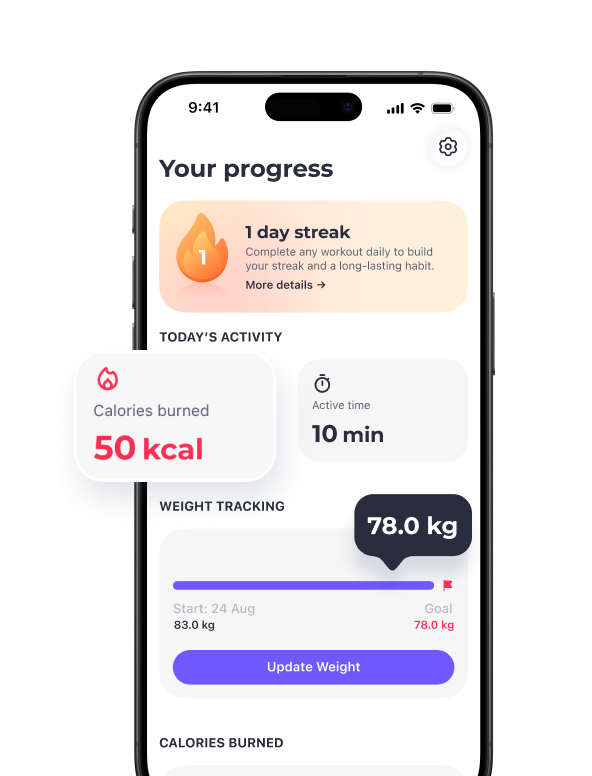
A structured walking program establishes predefined variables for pacing, intervals, and duration. Casual walking lacks progression metrics, causing physical fitness levels to plateau quickly. In contrast, a specialized indoor walking program utilizes targeted guidelines to increase heart rate systematically. Data published on mobile health interventions shows that applications providing daily goals improve user adherence by 40%. Practicing a structured walking workout at home replaces the necessity of open outdoor spaces or expensive treadmills. The software structure monitors step frequency to maintain a consistent cardiovascular stimulus. This systematic organization shifts a regular stroll into an objective physical routine.
Start your FitMe walking program todayBenefits of Regular Walking
Incorporating a structured walking for weight loss program introduces multiple physiological adaptations. Rhythmic muscle contractions alter metabolic functions and cardiorespiratory health.
Caloric Deficit:
According to a meta-analysis by Richardson et al., adults in pedometer-based walking programs lost an average of 1.27 kg. Regular walking increases daily energy expenditure and supports sustainable weight management.
Cardiovascular Health:
A review of 24 randomized controlled trials found that walking programs improve cardiovascular markers, including blood pressure and body composition. Consistent walking supports heart health and circulation.
Joint Preservation:
The Harvard T.H. Chan School of Public Health explains that walking is a low-impact activity that supports fitness while placing less stress on joints compared to high-impact exercise.
Metabolic Regulation:
Research by Kleist et al. on walking and energy-restricted diets shows that adding walking to a weight-management routine can improve metabolic health and insulin-related markers.
Visceral Fat Reduction:
In a study published in the Journal of Applied Physiology, Ross et al. reported that aerobic exercise, including walking, significantly reduced visceral fat levels. Lower visceral fat accumulation is associated with a reduced risk of metabolic and cardiovascular diseases.
Mental Clarity:
According to researchers from the Harvard T.H. Chan School of Public Health, regular walking improves blood circulation, increases oxygen delivery throughout the body, and stimulates the release of endorphins, which may help reduce stress and improve mental clarity.
Executing a walking workout at home protects individuals against inclement weather. This predictability stabilizes training consistency across consecutive weeks. Each session within the walking program provides a reliable stimulus to advance physical stamina safely.