Calisthenics is a form of strength training that uses your body weight for resistance in exercises such as push-ups, pull-ups, squats, and planks.
Weight training uses external resistance through dumbbells, barbells, or machines. Both methods can build strength and muscle, but they progress in different ways. With calisthenics, you usually make an exercise harder by increasing the range of motion or moving to a tougher variation. With weights, progression is often as simple as adding more load.
So, calisthenics vs weights: which is better?
For most people, neither method needs to win outright. A 2026 study published in the British Journal of Sports Medicine followed 147,374 adults for up to 30 years and found that 90–119 minutes of resistance training per week was associated with
• 13% lower all-cause mortality
• 19% lower cardiovascular mortality
• 27% lower neurological-disease mortality
Among people who did 60–119 minutes of resistance training plus 30–44 MET-hours of aerobic activity per week, mortality was 45% lower than among those who did no resistance training and little aerobic activity. The study counted both weight lifting and bodyweight exercises such as squats, push-ups, and lunges as resistance training, although calisthenics and Pilates were excluded from the analysis. ( Harvard Health )
Next, we’ll look at what the research says, what military training can teach us about bodyweight work, and how to build a hybrid week that uses both methods.
What Is Calisthenics and What Is Weight Training?
Calisthenics is resistance training where your body provides most of the load. Think push-ups, pull-ups, squats, planks, and their many variations. Weight training creates resistance externally. This usually means using dumbbells, barbells, kettlebells, or machines.
Both count as resistance training, and current ACSM guidance recognizes bodyweight exercise alongside more traditional equipment-based methods. (ACSM 2026 Resistance Training Guidelines )
The biggest practical difference is how you make the exercise harder. With weights, progression can be achieved by adding a few pounds to the bar. Calisthenics asks you to change the movement itself:
• add repetitions
• increase the range of motion
• slow the tempo
• change your leverage
• move to a harder variation
That difference is a big reason the calisthenics vs weights debate exists. One method makes external load very easy to measure; the other lets you train almost anywhere with little equipment. But both are simply different ways of giving your muscles resistance to work against.
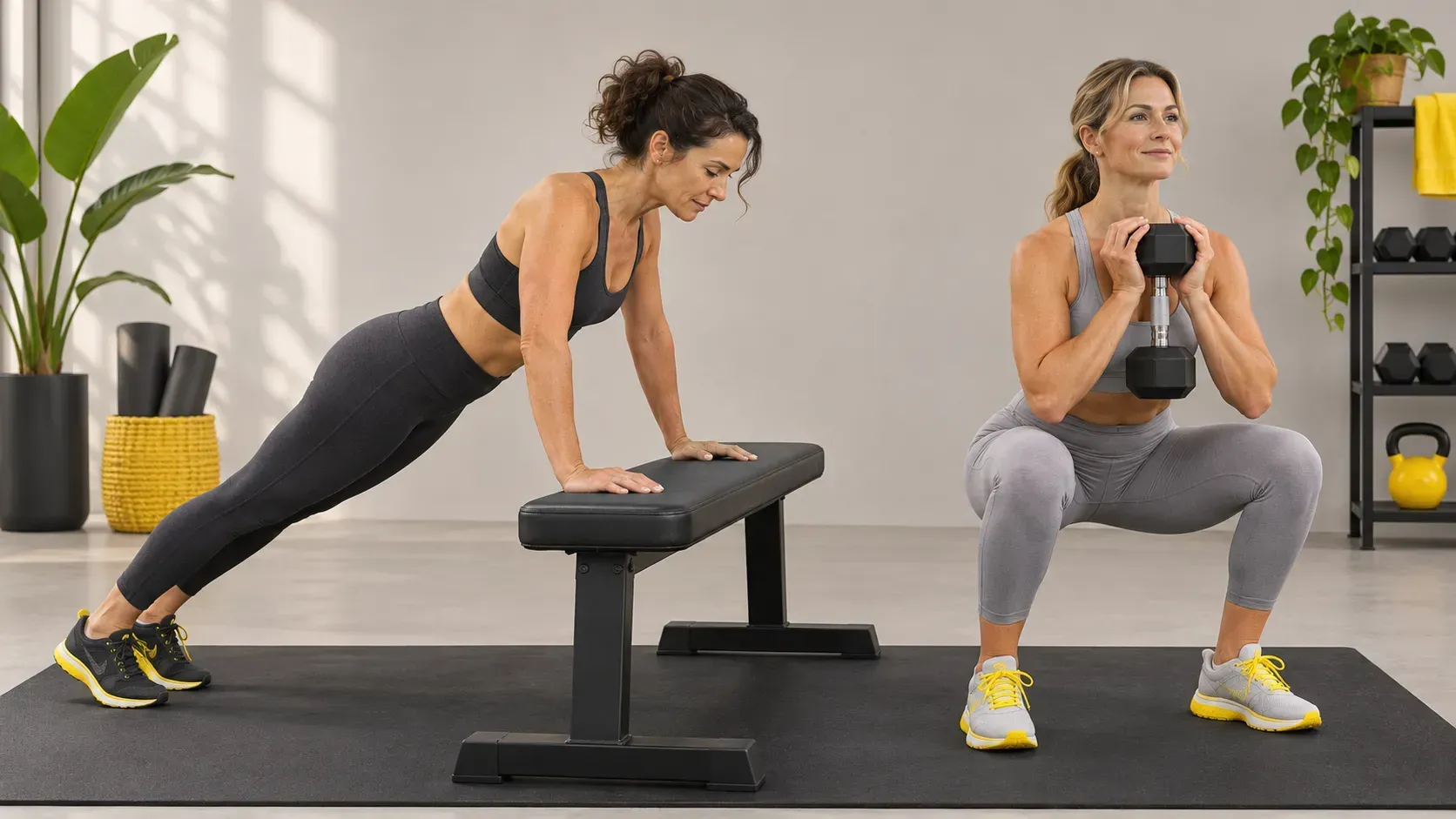
Calisthenics vs Weights Study: What the Research Actually Says
If you’re asking whether calisthenics is better than weights, research doesn’t prove one wins. The answer changes depending on what you care about most right now:
• muscle growth
• maximal strength
• convenience
• overall fitness
Muscle growth: lighter and heavier resistance can both work
For calisthenics vs weights for muscle growth, one of the most useful findings comes from a 2017 meta-analysis by Schoenfeld and colleagues. It included 21 studies comparing lower-load and higher-load resistance training. Muscle growth was similar across loading ranges when sets were taken to muscular failure, while heavier loads produced greater gains in one-repetition maximum (1RM) strength. (Schoenfeld et al., 2017 )
In practical terms, muscles don’t need one specific tool to grow. A demanding push-up variation can create a strong hypertrophy stimulus, but weights make it easier to keep adding load in small, measurable steps.
What the U.S. Army’s H2F data show
The U.S. Army offers another interesting comparison. A 2026 H2F study followed soldiers for about a year and found that those working with embedded sports-medicine teams spent more time on resistance training. They added nearly 18 lb to their deadlift, and their two-mile run times were 31 seconds faster than those of soldiers without those teams. (U.S. Army H2F study summary )
The study didn’t directly compare hybrid training with a single training style, but its findings fit the Army’s broader shift toward mixing methods. Methods in that mix include bodyweight exercises, resistance training, intervals, plyometrics, and other methods.
Strength training is linked to longer life
There’s also a calisthenics vs weights for longevity angle. In a 15-year study of 30,162 adults aged 65+, people who reported strength training at least twice weekly had 36% lower adjusted odds of all-cause mortality than those who didn’t. ( Kraschnewski et al., 2016 )
That doesn’t prove that two weekly sessions directly cause 36% lower odds of death, but it does reinforce one useful point: you don’t need to train every day for resistance exercise to matter.
Calisthenics vs Weights: The Honest Side-by-Side Comparison
The calisthenics vs weights physique debate usually sounds more dramatic than the research indicates. Both types can build muscle and strength, but they differ in:
• how easy they are to progress
• how much equipment they need
• which goals they suit best
| Metric | Calisthenics | Weights | Hybrid |
|---|---|---|---|
| Equipment | Little or none | Dumbbells, barbells, machines, or gym access | A mix of bodyweight and basic weights |
| Cost | Can be $0 | Varies from home equipment to gym fees | Can stay low with a minimal home setup |
| Progression | More reps, harder variations, leverage changes | Add weight in small measurable steps | Use both progression styles |
| Maximum strength (1RM) | Good | Best suited to this goal | Depends on how much heavy loading you include |
| Muscle growth | Excellent when training is challenging | Excellent | Excellent |
| Fat-loss support | Good | Good | Good, especially when paired with cardio |
| Home convenience | Excellent | Possible with equipment | Excellent with a few basics |
Research suggests muscle growth can be similar with a wide range of resistance loads. However, heavier loads have an advantage for maximal 1RM strength. (Schoenfeld et al., 2017 )
For most people, a hybrid setup covers the widest range of goals. But the best method is still the one you’ll realistically be doing six months from now. Next, we’ll turn that idea into a weekly plan.
What Military Calisthenics Teaches Us About Bodyweight Training
Military calisthenics isn’t a recent fitness invention. The U.S. War Department published an official Manual of Calisthenic Exercises in 1892, and Army physical training has kept evolving ever since. (U.S. Army historical review )
What 130+ years of military training can teach us
A few ideas have lasted for a reason:
• Your body is the most portable training tool you have. Push, pull, squat, core, and running patterns can cover a large share of general physical preparation without a full gym setup.
• Simple movements scale well. The Army has to train large groups in very different environments, so exercises that can be adjusted through repetitions, pace, range of motion, or difficulty have obvious practical value.
• Bodyweight work doesn’t need to stand alone. Modern Army doctrine (FM 7-22) trains five physical components:
• muscular strength
• muscular endurance
• aerobic endurance
• anaerobic endurance
• power
In other words, the doctrine doesn’t treat any single method as enough for every goal. (U.S. Army FM 7-22 )
That last point may be one of the most useful takeaways from the calisthenics vs weights debate: calisthenics offers a strong, low-equipment foundation, while external load makes some forms of progression easier.
The H2F findings we mentioned earlier reinforce the same shift. Modern Army training still uses bodyweight work, but it now combines it more deliberately with resistance training, intervals, plyometrics, and other methods.
That’s also the logic behind FitMe’s approach: use bodyweight training as a practical base, then progress it with structure rather than random workouts.
How to Combine Calisthenics and Weights: A Research-Informed Framework
A good hybrid plan gives both training styles a clear job. Heavy resistance can make maximal-strength progression easier to measure, while bodyweight work adds variety, movement skill, and a practical way to build more training volume. Three principles help organize the week.
1. Train each major muscle group regularly
The ACSM 2026 Position Stand recommends resistance training for all major muscle groups at least twice per week. For strength, heavier loads of 80% 1RM or above tend to produce the greatest gains. Muscle growth improves with higher weekly volume, around 10 or more sets per muscle group. (ACSM 2026 Resistance Training Position Stand )
2. Make progression easy to track
A practical way to organize training is around volume, intensity, and frequency. Research shows a dose-response relationship between weekly sets and muscle growth: more weekly sets generally produce more hypertrophy, up to a point. A systematic review of trained young men found that about 12–20 weekly sets per muscle group worked well, with little extra benefit beyond that for most muscles. Beginners can start closer to 10 weekly sets and split them across two or more sessions. (Schoenfeld et al., 2017; Baz-Valle et al., 2022)
This framework also makes room for different progression tools, such as:
• more weight for lifting
• more reps
• harder variations for calisthenics
3. Give each session a priority
The 2026 Minimalist Hybrid Training Framework (MHTF), designed for advanced recreational trainees with at least two years of training experience, proposes 3–4 weekly sessions guided by three principles:
• stimulus prioritization
• fatigue management
• progressive overload
In practice, each session has one primary goal. A session can emphasize strength, another on hypertrophy, and a third on conditioning. ( Lessa, 2026: Minimalist Hybrid Training Framework )
One possible four-day structure looks like this:
| Day | Main focus |
|---|---|
| Monday | Upper body: weights, strength focus |
| Tuesday | Upper body: calisthenics, higher-rep work |
| Wednesday | Rest, walking, mobility |
| Thursday | Lower body: weights + bodyweight movements |
| Friday | Mixed full-body session |
| Weekend | Rest, walking, mobility |
The exact split can change with your schedule. The useful part is the structure:
1. Repeat major movement patterns through the week
2. Progress them over time
3. Avoid stacking all of your hardest work into one session
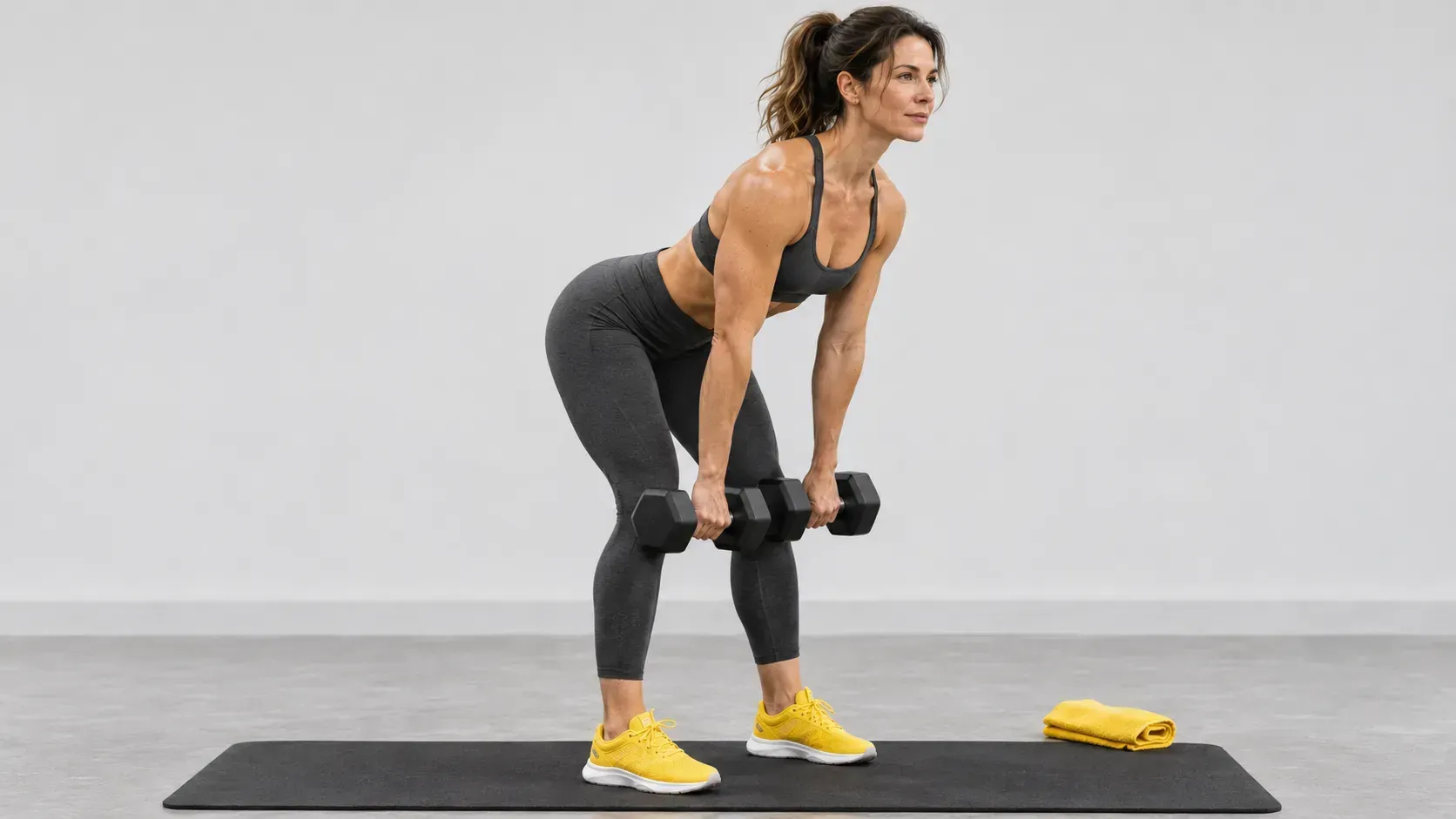
Calisthenics vs Weights: 4-Week Beginner Plan (Informed by ACSM Guidance)
For a true beginner, the goal isn’t to chase the perfect split. It’s to build a routine you can repeat. ACSM’s 2026 guidance emphasizes that the biggest jump in results comes from going from no resistance training to some resistance training, and recommends training all major muscle groups at least twice per week. (ACSM 2026 Resistance Training Position Stand )
One simple progression method is double progression. The first step is to add repetitions within a set range. Once you reach the top of that range, the second is to either:
• increase the resistance
• move to a harder variation
For example, if your target is 3×8–12, work toward 12 reps before adding weight. In calisthenics, the same idea applies by moving to a tougher version of the exercise.
| Week | Focus |
|---|---|
| Week 1: Learn the movements | 3 full-body sessions, 1–2 sets per movement, around 8–12 reps |
| Week 2: Add reps | 2–3 sets per movement; move toward the top of your rep range |
| Week 3: Add volume | Keep 3 sessions or add a fourth; aim for more total weekly sets |
| Week 4: Build the hybrid | Combine 2 calisthenics sessions with 1 weights session and 1 mixed session |
By week four, the aim is to have a repeatable routine that trains the major muscle groups at least twice weekly and moves toward ~10 weekly sets per muscle group.
Calisthenics vs Weights Over 40: What the Research Shows
For calisthenics vs weights over 40, age doesn’t change the basic principle: resistance training still produces meaningful adaptations. What may change is which format feels easiest to fit into everyday life and progress consistently.
The long-term BJSM and Kraschnewski studies discussed earlier both support strength training later in life. The BJSM study included middle-aged and older adults, while the 15-year Kraschnewski study focused specifically on people aged 65+. (Harvard Health, 2026, Kraschnewski et al., 2016)
What do we know about calisthenics later in life?
A four-month study of women with an average age of about 68 found that participants in a supervised aerobic calisthenics program showed improvements in VO₂max, strength-related measures, flexibility, balance, body composition, and quality of life. ( Pinar et al., 2014 )
More recent research also suggests that simple home-based bodyweight resistance work can remain effective well into later adulthood. In one eight-week study of men aged 65–88, body-mass exercises improved knee-extensor power, with the faster-training group increasing peak power by 24%. (Home-based resistance training in older adults, 2024 )
So, is calisthenics healthier than weights?
Research doesn’t support a universal winner. Calisthenics has a practical advantage in accessibility and easy at-home use, while external weights make progressive loading especially straightforward. Both can contribute to strength, balance, and physical function across adulthood.
Calisthenics can be a joint-friendly way to build strength because many movements are easy to scale through range of motion, leverage, and support. Many calisthenic exercises are closed-chain movements. A review of closed-chain rehabilitation notes lower shear forces during some closed-chain movements compared with open-chain alternatives. (Closed-chain rehabilitation review )
That makes them a useful option, but it doesn’t mean all calisthenics is automatically safer than all weight training.
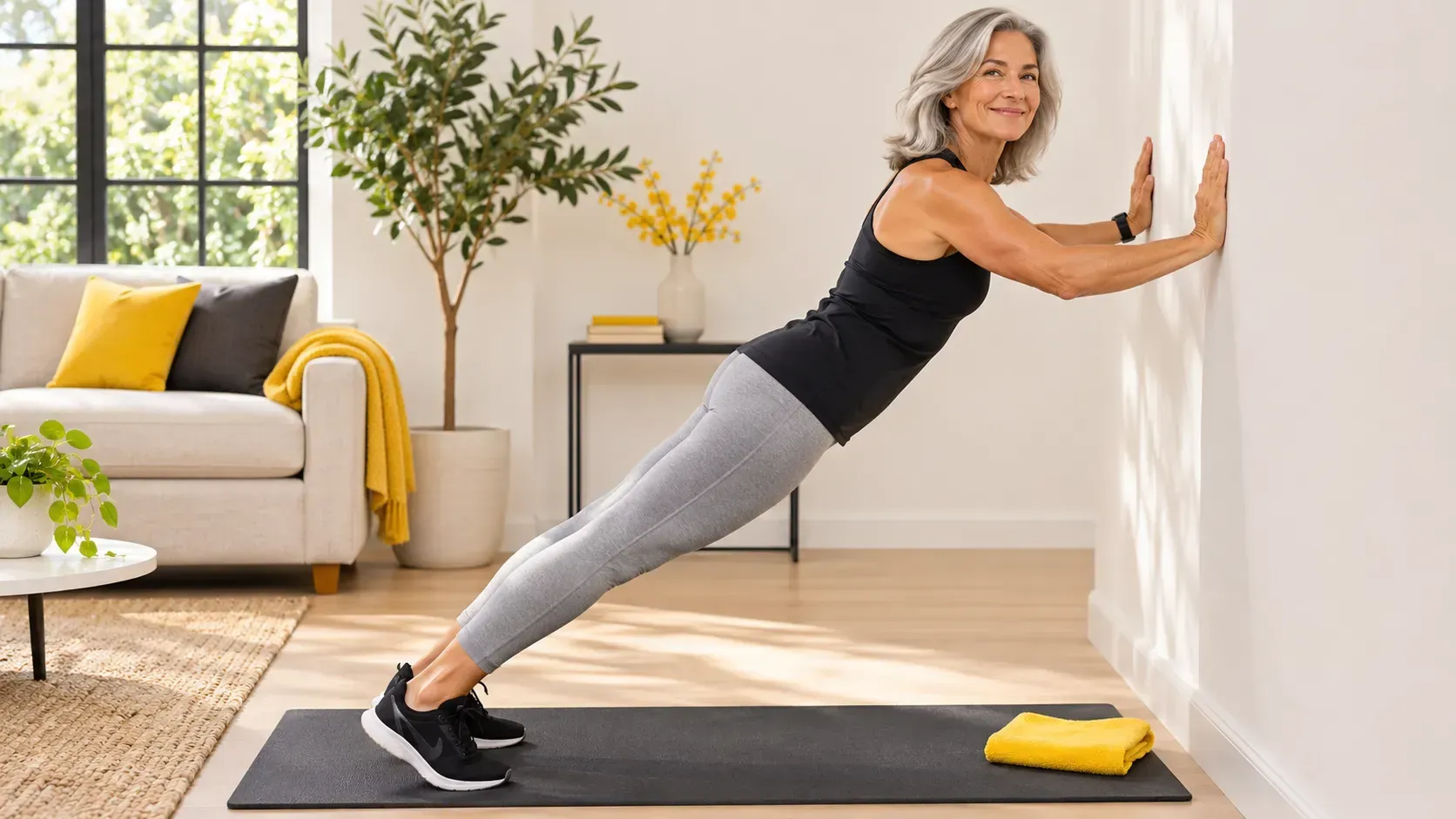
Calisthenics vs Weights Pros and Cons: How to Choose
The calisthenics vs weights pros and cons are less about one method being “good” and the other “bad,” and more about what each makes easier.
| Metric | Calisthenics | Weights |
|---|---|---|
| Accessibility | Free or very low-cost; easy to do at home | Requires weights, machines, or gym access |
| Progression | Harder variations, leverage changes, slower tempo, added reps | Simple to track by adding external load |
| Maximum strength (1RM) | Good | Better suited to maximal-load goals |
| Muscle growth | Excellent with enough challenge | Excellent across a wide loading range |
| Fat-loss support | Good, especially in circuits or higher-volume sessions | Good, especially when paired with adequate overall activity |
| Longevity | A practical form of resistance training you can maintain anywhere | Linked to better long-term health in observational studies |
| Mobility and balance | Can train both alongside strength | Depends heavily on exercise selection |
| Joint demands | Many movements can be scaled through leverage and support | Load can be adjusted very precisely |
| Home training | Excellent | Very possible with basic equipment |
| Cost | Can be $0 | Anywhere from a pair of dumbbells to a gym membership |
| Beginner-friendly | Easy to start, though some classic moves are difficult | Easy to scale with light loads or machines |
| Training after 40 | Accessible and easy to adapt | Especially useful when progressive loading is the goal |
For calisthenics vs weights for fat loss, neither method has an automatic advantage. Both can increase energy expenditure and help maintain or build muscle, but a calorie deficit remains the main driver of weight loss. A 2025 meta-analysis found that adding resistance training to a calorie-restricted diet didn’t significantly increase total weight loss, but it helped preserve lean mass and led to greater fat loss. ( Binmahfoz et al., 2025 )
For muscle growth, the gap is smaller than many people expect. A 2017 meta-analysis found similar hypertrophy across lower and higher resistance loads, while heavier training had the edge for maximal 1RM strength.
Weight lifting and basic bodyweight exercises both count toward the type of resistance training associated with better long-term health outcomes. The 2026 BJSM study counted both weight lifting and bodyweight exercises such as squats and lunges as resistance training, although calisthenics and Pilates were excluded from its analysis. (Harvard Health, 2026)
So how do you choose?
If cost, equipment, or gym access is the main barrier, calisthenics is the easier starting point. If your goal is pushing a specific 1RM or making small load increases easy to track, weights have the advantage. If you want both convenience and straightforward strength progression, a hybrid setup gives you the most flexibility.
5 Mistakes That Make Both Methods Less Effective
1. Doing endless reps without enough challenge. High-rep sets can still build muscle, but they need to be demanding. Research shows hypertrophy can happen across both lower and higher loads when sets are taken to muscular failure.
2. Never progressing. If the same workout feels equally easy month after month, give your muscles a new reason to adapt: add reps, resistance, range of motion, or a harder variation.
3. Skipping preparation. A short bout of light movement followed by a few dynamic or exercise-specific movements may improve immediate performance and make the transition into training smoother.
4. Using walking as your only training. Walking is an excellent aerobic activity, but resistance training has its own role in maintaining and building muscle and strength.
5. Treating recovery as wasted time. Progress depends on what happens between workouts too: sleep, food, and enough time to recover all matter.