The U.S. Army has used bodyweight training in its physical preparation for more than 100 years. Back in 1892, the War Department even published an official manual on calisthenics. [1] That approach is still present in today's Army Fitness Test, where the hand-release push-up and plank are two of the five events. [2]
This FitMe article answers practical questions about military calisthenics. We'll cover topics including:
how the training works
how often to do it
what results you might see
what it costs
how women over 40 can approach it, and more
Keep in mind that if you're new to exercise or have health concerns, you should consult a healthcare professional before getting started.
What is military calisthenics?
It's a form of physical training that relies on bodyweight exercises to build the strength, endurance, mobility, and conditioning needed for physical readiness. The word calisthenics comes from the Greek:
• kalos, meaning "beautiful"
• sthenos, meaning "strength"
The "military" part does not describe a separate type of exercise. It refers to the structured way these movements are used alongside running, loaded strength work, and other conditioning methods.
U.S. Army doctrine includes muscular strength, hypertrophy, and muscular and aerobic endurance among the components of physical readiness. [3] Bodyweight training also appears in official Marine Corps and Air Force conditioning resources. [4] [5]
Is military calisthenics a real thing?
Yes. The term gets used loosely in online fitness marketing, but bodyweight training is a real part of military physical preparation.
The U.S. Army's current FM 7-22 Holistic Health and Fitness includes drills based on bodyweight movements alongside free weights, running, climbing, loaded carries, and other training methods. [3]
The current Army Fitness Test also includes the hand-release push-up and plank among its five official events. [2] The test combines no-equipment movements with running and loaded work, including the three-repetition maximum deadlift and sprint-drag-carry. Bodyweight exercises also appear in official Marine Corps, Navy, and Air Force fitness tests. [6] [7] [8]
So, this training approach isn't a branded workout invented for social media. It's better understood as the bodyweight-training part of a broader military fitness system.
Does military calisthenics really work?
Research suggests it can, as long as the exercises are challenging enough and progress over time. A 2023 Bayesian network meta-analysis by Currier and colleagues included 178 studies and 5,097 participants in its strength analysis. Every resistance-training prescription studied improved strength compared with no exercise. [9]
For bodyweight training specifically, the ACSM 2026 Position Stand confirms that bodyweight exercises and home-based routines can improve strength, muscle growth, and physical function. [10] Research on calisthenics itself also shows measurable gains in strength, endurance, and cardiorespiratory fitness. We'll look at those numbers below.
How does military calisthenics work?
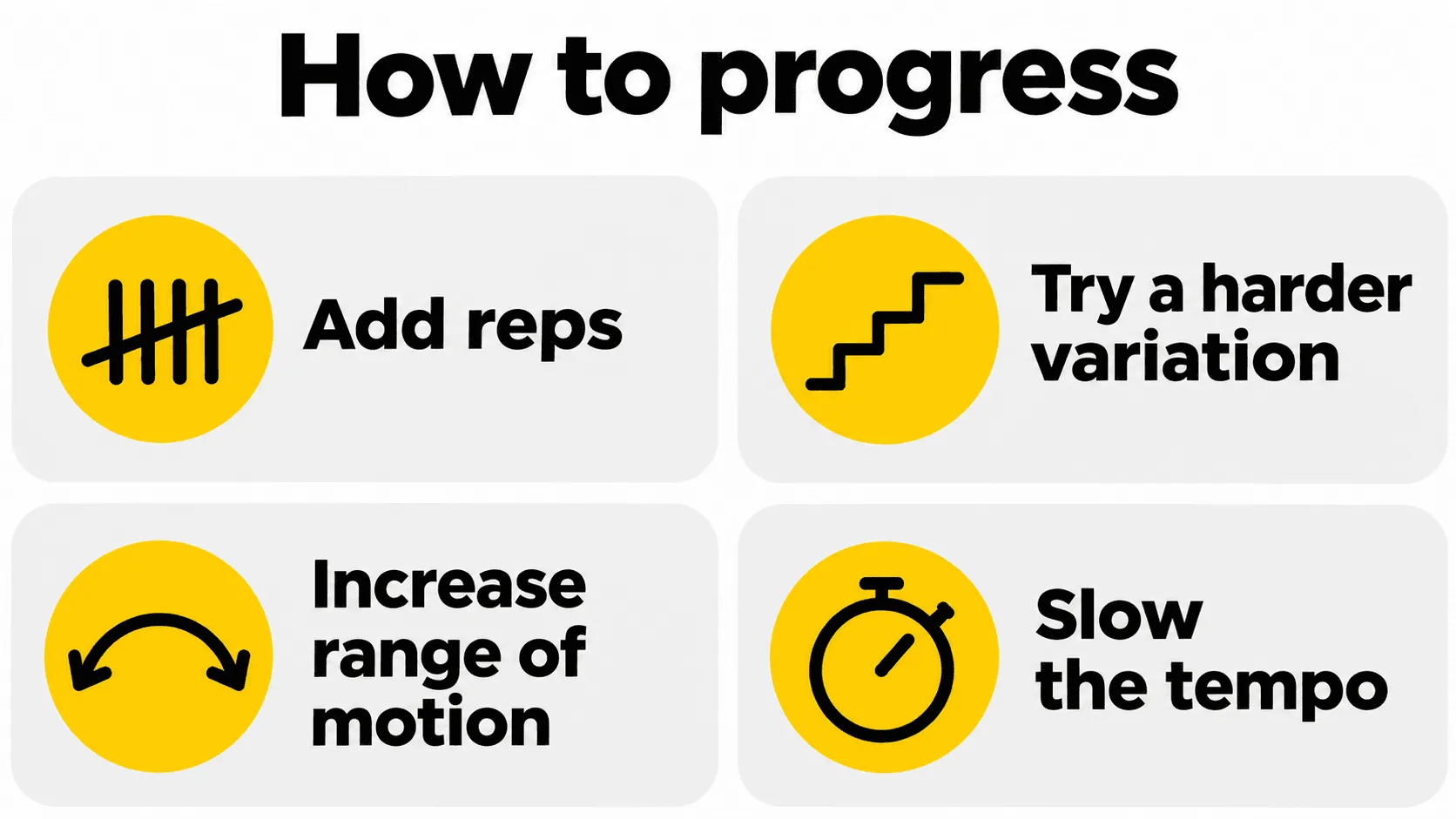
In calisthenics, you can achieve progression by:
• doing more reps
• trying a tougher variation
• moving through a bigger range of motion
• changing your leverage
As you make exercises more demanding, your muscles have to adapt. This can improve strength and support muscle growth over time. [11]
How effective is military calisthenics?
The research is encouraging. Bodyweight training has been linked to improvements in strength, endurance, and cardiorespiratory fitness, though the size of those gains depends on the program, training frequency, and where you're starting from.
| Study | What was measured | Result |
|---|---|---|
| Thomas et al., 2017 | Push-up and pull-up performance | +16.4% push-ups and +39.2% pull-ups after 8 weeks |
| Lipecki & Rutowicz, 2015 | Aerobic capacity, trunk endurance, lower-body power | +33.3%, +10.7%, and +5.6%, respectively, after 10 weeks in 15 young women (no control group) |
| Archila et al., 2021 | Cardiorespiratory fitness | An 11-minute circuit, 3 times a week for 6 weeks, improved VO2peak compared with a control group in young inactive adults (19 participants); strength measures did not change |
| Currier et al., 2023 | Strength and hypertrophy | Across 178 studies and 5,097 participants in the strength analysis, resistance training consistently outperformed no exercise |
So, while there's no universal eight-week guarantee, participants in these studies saw measurable fitness gains within 6-10 weeks when training is consistent and progressively challenging.
Why does the military use calisthenics?
One of the advantages of calisthenics for military training is that you can do it almost anywhere. You don't need much equipment, and the same basic session is easy to adapt to a larger group by changing:
• the pace
• number of reps
• exercise difficulty
It also develops strength relative to your own body weight, which can be especially useful for tasks like climbing, crawling, or getting over obstacles.
Army training doesn't rely on bodyweight work alone, though. It combines it with running, resistance training, climbing, and loaded carries. [3] For general fitness, ACSM notes that consistency and progressive training matter more than using one specific type of equipment. [10]
What does military calisthenics consist of?
A typical session combines four elements rather than focusing on one exercise type.
| Phase | What happens | Typical duration |
|---|---|---|
| Warm-up | Mobility and activation | 5-10 min |
| Strength-endurance circuit | Multi-joint, higher-rep work | 10-20 min |
| Conditioning | Running, shuttle work, or jumping | 5-10 min |
| Cooldown | Stretching and controlled breathing | 3-5 min |
You can change the structure depending on your fitness level. The main goal is to make exercises more challenging over time. For example, in a 2018 randomized trial, 4 weeks of progressive calisthenic push-up training in moderately trained men led to gains in upper-body strength, including bench-press 1RM. [15]
What exercises are in military calisthenics?
There isn't one fixed exercise list. Instead, the training usually covers the main movement patterns needed for overall physical readiness.
| Category | Main focus | AFT / military example |
|---|---|---|
| Push | Chest, shoulders, triceps | Hand-release push-up |
| Pull | Back, biceps, grip | Climbing, obstacle work, pull-up training |
| Legs | Quads, glutes, calves | Deadlift and sprint-drag-carry |
| Core | Trunk strength and stability | Plank |
| Conditioning | Cardiovascular endurance and work capacity | Two-mile run |
What does military calisthenics look like?
A typical session is simple to set up:
• Duration: around 20-45 minutes
• Space: a small workout area or mat
• Format: high-repetition circuits with short rests or AMRAP-style blocks
• Equipment: little or none, depending on the workout
Murph is probably the best-known cultural example. The CrossFit Hero workout is often done around Memorial Day to honor U.S. Navy Lt. Michael Murphy. [16] The workout itself is tough: two 1-mile runs, 100 pull-ups, 200 push-ups, and 300 air squats.
But calisthenics doesn't always have to look like that.
A study showed young inactive adults improved cardiorespiratory fitness by doing an 11-minute bodyweight circuit 3 times a week for 6 weeks. [14]
How to start military calisthenics?
Start by figuring out your current baseline, then build gradually rather than jumping straight into high-volume circuits. For more guides to bodyweight training, browse our calisthenics articles .
1. Test your baseline. Record your maximum hand-release push-ups in 2 minutes, plank time, and a comfortable max set of air squats. For reference, the current AFT awards 100 points in the hand-release push-up to ages 22-26 at 61 reps for men and 50 for women. [17]
2. Train 2-3 days per week. ACSM recommends working major muscle groups at least twice weekly. [18]
3. Progress deliberately. Add reps, shorten rest periods, or move to harder variations as exercises become easier.
4. Make room for recovery. Avoid pushing the same muscles hard every day, and support training with enough sleep and nutrition.
If you'd rather follow a ready-made structure, FitMe also offers a guided Calisthenics Program .
How hard is military calisthenics?
The movements may look simple, but short rests and repeated sets can make a session demanding. A 0-10 RPE scale is an easy way to judge intensity: vigorous effort generally starts around 7-8. [23]
| Level | RPE | How it feels |
|---|---|---|
| Beginner | 7-8/10 | Hard; breathing noticeably heavier |
| Intermediate | 8-9/10 | Very hard; talking becomes difficult |
| Advanced | 9-10/10 | Near-maximal effort; only short phrases feel comfortable |
After an unfamiliar or especially demanding session, muscle soreness can develop 24-48 hours later. [24]
What is a military calisthenics program?
A workout is one session; a program gives those sessions a direction over several weeks.
Most structured plans combine three things:
• a baseline assessment
• a progression strategy
• enough recovery between harder sessions
Programs may run for 1-3 months, with regular reassessments to track progress and decide whether the program needs to change. That's useful because research supports using multiple sets when the goal is strength or muscle growth rather than relying on one set indefinitely. [9]
FitMe's 28-day calisthenics challenge follows the same general idea: a ready-made structure for people who don't want to build a training plan from scratch.
How much does military calisthenics cost?
This training method can cost nothing at all if you train at home with your own body weight. Paid options add structure, tracking, or individual coaching.
| Option | Typical cost | What you get |
|---|---|---|
| DIY | $0 | Bodyweight training with free instructions or videos |
| FitMe | Varies by plan and region | Structured calisthenics programs and progression tracking |
| Personal trainer | Around $50-120 per session | Individual programming and real-time form feedback |
Fit Me is free to download, with premium subscriptions and separate program purchases available in the app.
Military calisthenics: how long to see results
Results don't appear all at once. Early changes are usually about performance, while visible changes tend to take longer.
| Stage | Approximate timeline | What you may notice |
|---|---|---|
| Early adaptation | 2-3 weeks | Exercises start to feel more coordinated and manageable |
| Performance gains | 4-8 weeks | More reps, better endurance, and measurable strength improvements |
| Visible changes | 8-12 weeks | Muscle definition and body-composition changes may become more noticeable |
| Long-term progress | 4-6 months | Larger changes in strength, endurance, and physique can accumulate |
For example, Thomas et al. reported 16.4% more push-ups and 39.2% more pull-ups after eight weeks of calisthenics training. [12]
In another study, ten weeks of bodyweight training in 15 women aged 21-23 (with no control group) improved:
aerobic capacity by 33.3%
trunk endurance by 10.7%
lower-body explosive strength by 5.6% (Source)
Consistency, progression, recovery, nutrition, and your starting fitness level all affect how quickly those changes appear.
What is the hype about military calisthenics?
The renewed interest isn't coming from one viral workout. Several fitness shifts are happening at once:
1. The AFT changed in 2025. The Army replaced the ACFT with the AFT on June 1, putting military fitness standards back in the spotlight. [2]
2. Bodyweight and app-based training both remain relevant. Mobile exercise apps ranked #2 and bodyweight training #18 in ACSM's 2025 Worldwide Fitness Trends survey of fitness professionals, which points to continued interest in accessible workouts that don't depend on a traditional gym. [25]
3. Murph keeps military-style bodyweight training visible. Many CrossFit gyms program the workout around Memorial Day each year.
4. Accessible training has a wider audience. Programs for older adults ranked #3 in ACSM's 2025 trends [25] , reflecting demand for scalable ways to stay strong.
5. Resistance-training research has grown stronger. Large reviews now show that many different resistance-training approaches can improve strength and muscle growth when training is progressive. [9]
What is military calisthenics for men and women?
The training method itself doesn't change by sex: men and women can use the same movement patterns, progression methods, and training principles.
| Measure | Men | Women |
|---|---|---|
| Relative muscle growth | Similar | Similar |
| Absolute muscle growth | Slightly higher on average | Slightly lower on average |
| Relative strength response | Similar lower-body gains | Similar lower-body gains; relative upper-body gains may be greater |
| Muscular endurance | Depends on the task | May show greater fatigue resistance in some sustained or repeated efforts |
| AFT age 22-26 push-up benchmark | 61 reps | 50 reps |
| AFT age 22-26 deadlift benchmark | 350 lb | 230 lb |
What is military calisthenics for men?
For men, this approach can emphasize relative strength, upper-body development, and progressive overload through harder exercise variations or added resistance. In a four-week trial, progressive push-up training improved bench-press 1RM, with gains comparable to traditional bench-press training. [15] Research also suggests that men tend to gain slightly more absolute muscle size, while relative muscle growth is broadly similar between sexes. [26]
Weighted vests and more difficult variations can provide further progression once basic bodyweight work becomes easy.
What is military calisthenics for women?
For women, the method can build functional strength, core stability, lower-body power, and muscular endurance without requiring heavy equipment. As mentioned earlier, in a 10-week study of 15 women aged 21-23, aerobic capacity, trunk endurance, and lower-body explosive strength improved significantly after bodyweight training. [13]
Women also tend to have a greater proportion of Type I muscle fibers. A 2025 meta-analysis found higher Type I fiber distribution and proportional area in women than in men. [29] These slow-twitch fibers are more fatigue-resistant and may contribute to greater fatigue resistance during some sustained or repeated efforts. [28]
What is military calisthenics for women over 40?
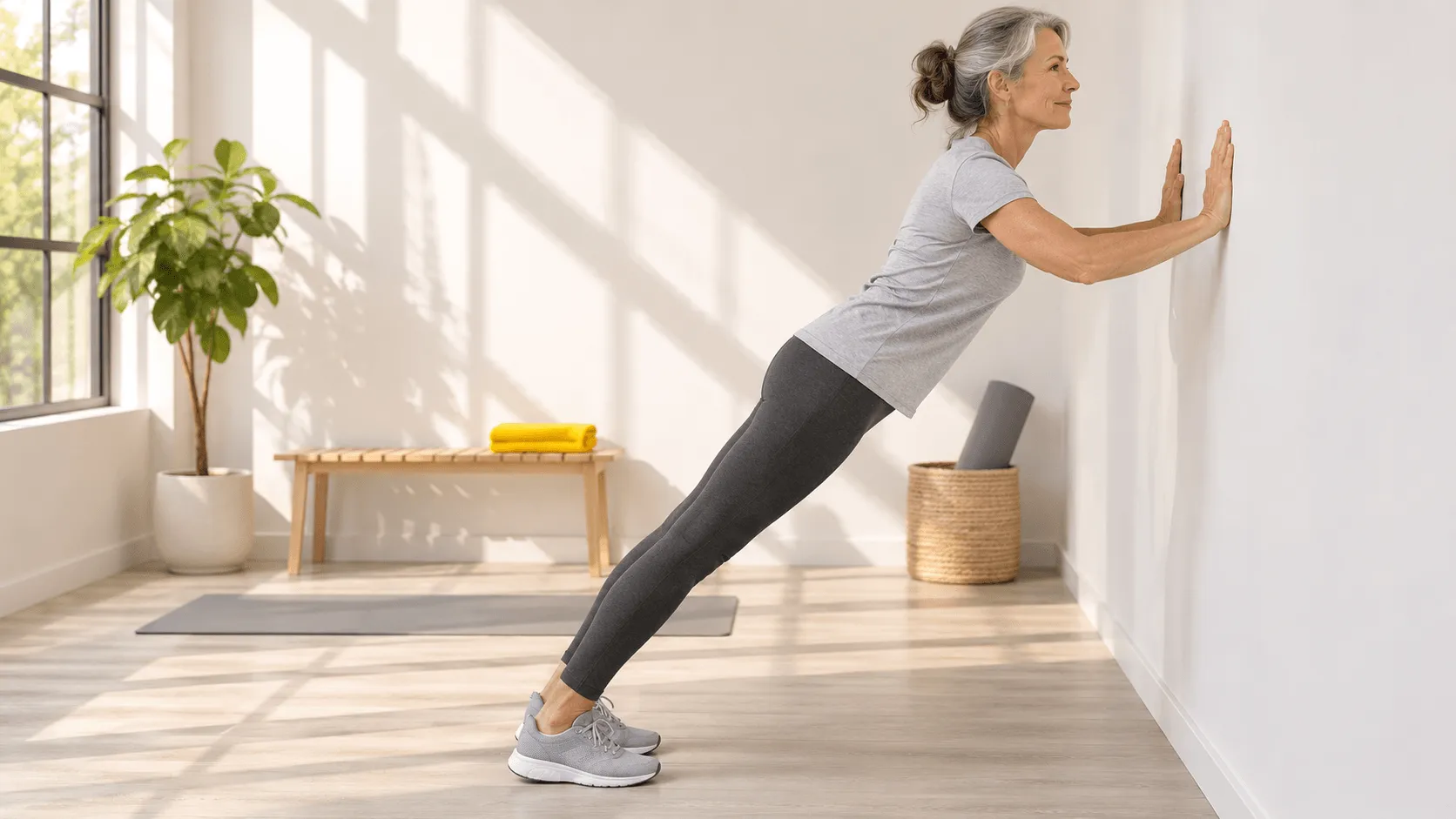
Your 40s, 50s, or 60s aren't too late to start bodyweight training.
This training method is easy to scale: lower-impact variations, shorter sets, and extra support can make the same movement patterns work at very different fitness levels. For a gentler starting point, you can try chair yoga or wall Pilates at home.
Research in older women backs up the potential. A 12-week bodyweight resistance program improved lower-body strength and balance in older women. [30] A 2023 meta-analysis covering 80 studies and 5,581 postmenopausal women found that exercise training in general (not bodyweight training specifically) had a positive effect on bone mineral density. [31]
So, there's no need to treat 40 as an expiration date for getting stronger.
Military calisthenics isn't hype. It's a long-standing system with research behind it
The training approach has much more behind it than a recent fitness trend. The evidence is pretty straightforward:
1. It has more than a century of military history. The U.S. War Department published an official calisthenics manual in 1892, and bodyweight training has remained part of military physical preparation ever since. [1]
2. Modern resistance-training guidelines support bodyweight exercise. ACSM's latest Position Stand recognizes bodyweight and home-based resistance training as effective options. [10]
3. Large-scale research supports resistance training overall. Currier et al. analyzed 178 studies and 5,097 participants in the strength analysis and found that all tested resistance-training prescriptions improved strength compared with no exercise. [9]
4. Military fitness testing still includes bodyweight performance. The AFT became the Army's test of record on June 1, 2025. [2]
5. Individual trials point in the same direction. Together, small studies by Thomas, Lipecki, and Archila found measurable improvements in strength, muscular endurance, and cardiorespiratory fitness after bodyweight training. [12] [13] [14]
If military calisthenics is a fitness trend, it's one with more than a century of history and a growing research base behind it.
Want to try it yourself? Take the FitMe quiz and find your 28-day calisthenics challenge.